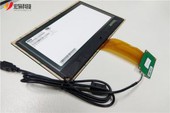

The introduction of capacitive touch sensing technology presents various challenges for real-time applications. The following design considerations can help reduce parasitic capacitance and increase finger capacitance, ultimately ensuring better sensor design.
Sensor Pad Size: When designing a capacitive sensor, the shape of the sensor pad is not important. The main concern is the area of the pad that determines the sensitivity. The larger the pad area, the higher the sensitivity. In general, this area should be considered as the average size of the user's fingers (15x15mm). If the size of the sensor pad is larger than the ideal value, the parasitic capacitance will increase because it is closer to ground.
Interval between sensors: The proximity of the sensor to the proximity sensor should be considered. When a sensor is touched, the finger produces additional capacitance not only for the current sensor but also for its adjacent sensor. Therefore, to isolate the finger capacitance, there must be some space between adjacent sensors. Ideally, the sensor spacing should be 2 to 3 times the thickness of the capacitive touch sensing system. For example, for a typical capacitive touch-sensing design, if the thickness of the cover material is 3mm, the distance between the sensors should be 6mm to 9mm.